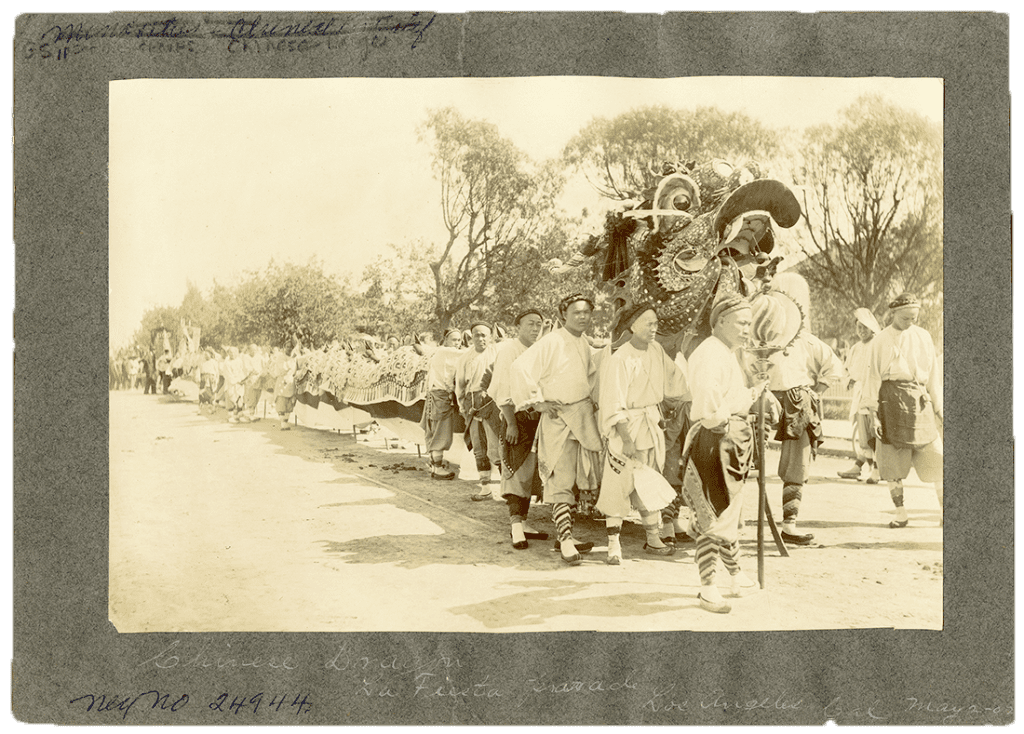
photographer unknown, 1902, Albumen
print. California Historical Society
Collection.
Chinese Pioneers: Power and Politics in Exclusion Era Photographs
On view March 21 – July 26
Chinese Pioneers: Power and Politics in Exclusion Era Photographs examines how photography shaped the lives and public perception of Chinese Californians during and after the 1882 Chinese Exclusion Act.
Beginning in the Gold Rush era, when significant numbers of Chinese immigrants arrived in California, the exhibition traces how anti-Chinese sentiment led to discrimination, violence, and exclusionary federal policy. Through studio portraits, street photography, and government registration images, visitors will see how photographs functioned as both tools of dignity and instruments of surveillance.
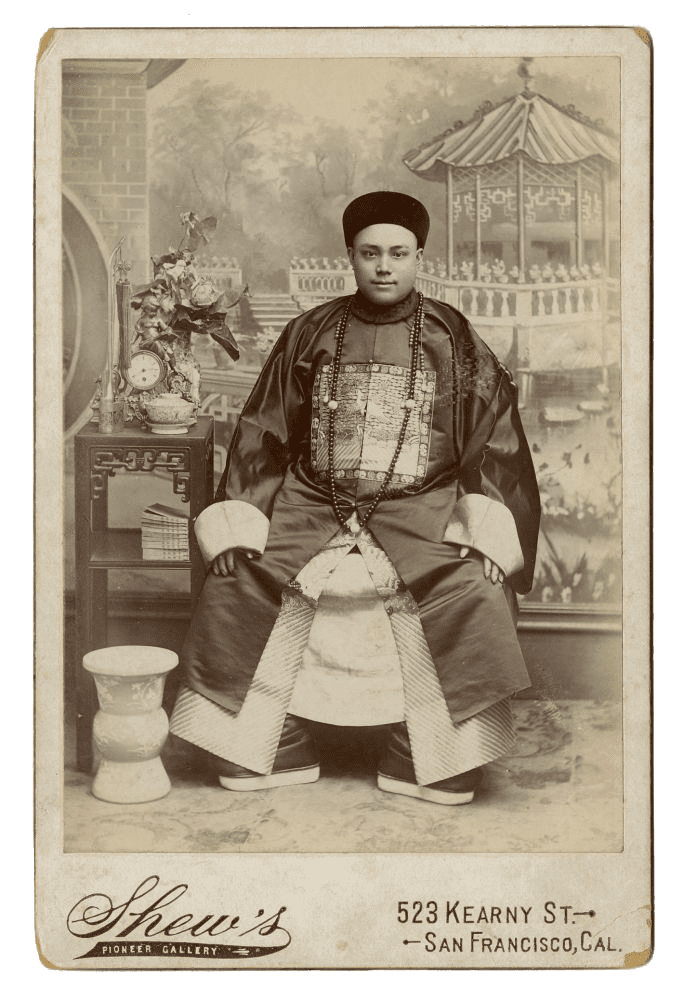
Pioneer Gallery, 1880s, Albumen
cabinet card. California Historical
Society Collection.
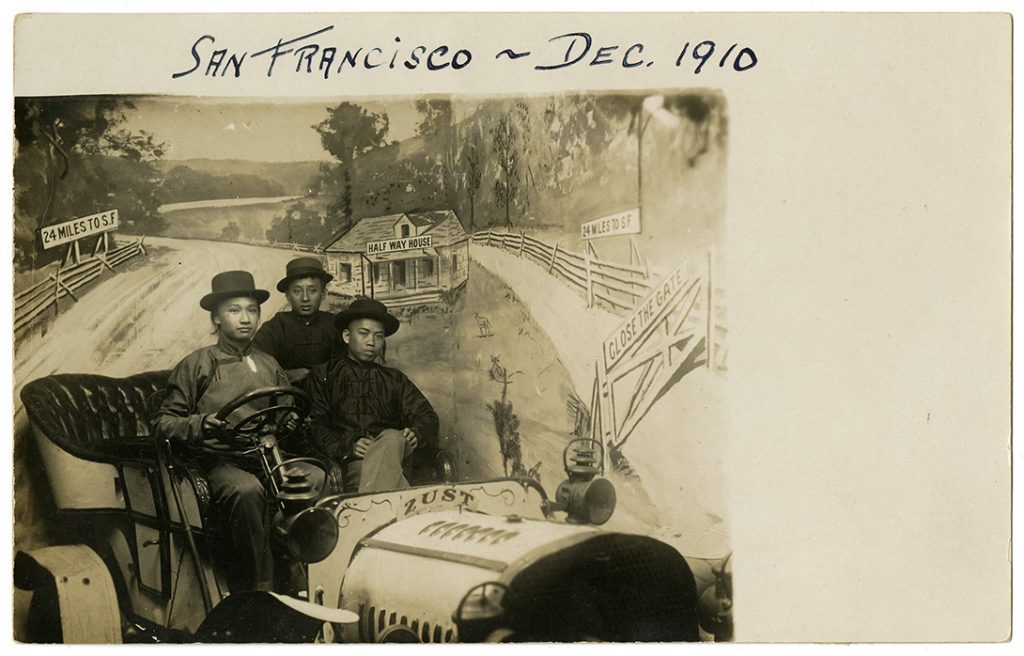
Duhem, 1910, Gelatin silver print.
California Historical Society Collection.
In this postcard, Woo Dunn poses with
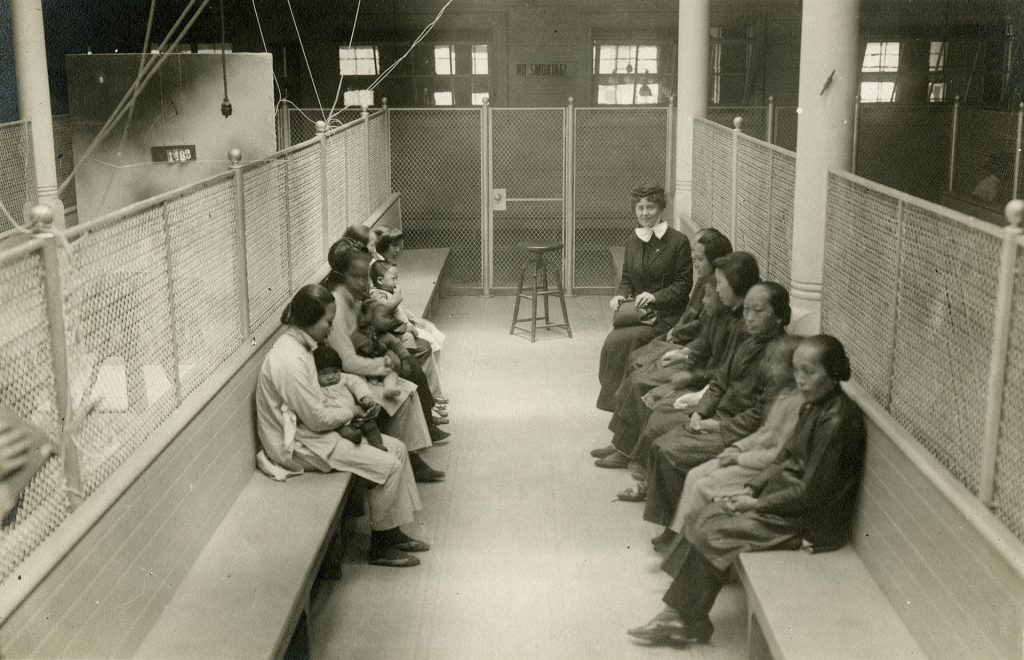
Immigration Station, Angel Island”
Photographer unknown, after 1910,
Gelatin silver print. California Historical
Society Collection.
While revealing the social and political challenges of the era, the exhibition also highlights resilience and agency within Chinese communities. These historic images invite reflection on how visual culture shapes identity, power, and belonging — and how the past continues to inform our present.
This traveling exhibition is organized by the California Historical Society and toured through Exhibit Envoy.
Chinese Pioneers: Power and Politics in Exclusion Era Photographs was organized by the California Historical Society and tours through Exhibit Envoy thanks to the generosity of the Henry Mayo Newhall Foundation.
An Invitation to Reflect
We invite you to spend time with these images.
Chinese Pioneers is more than a historical photography exhibition. It is an opportunity to consider how identity has been shaped, recorded, and sometimes constrained through systems of power. It asks us to look closely — not only at the photographs themselves, but at the structures and stories behind them.
For our community in the greater San Bernardino County region, this history resonates. California’s story has always been shaped by migration, labor, exclusion, resilience, and cultural exchange. The experiences of Chinese Californians during the Exclusion Era are not isolated chapters of the past — they are part of the broader fabric of our shared history.
As you move through the gallery, we hope the exhibition sparks conversation:
About belonging.
About representation.
About who controls the narrative — and who reclaims it.
History lives in images.
It also lives in dialogue.
We welcome you to visit, reflect, and continue the conversation.
General admission is $10 (adult), $8 (military or senior), $7 (student), and $5 (child ages 6–12). Children five and under and Museum Foundation members are admitted free. Parking is free. The museum is accessible to persons with disabilities.